Flowers in Viennese art: from still life to installation
Journal – 7 min read
Flowers in Viennese art move from carefully observed still lifes to Biedermeier interiors, modernist gardens and installations made with living stems. To follow that change, compare what artists do with scale, light and decay, using the Belvedere’s collection and exhibition records as a starting point.
Text: Elisabeth Hofer · · Updated
The flower as memento mori: still life and Baroque visual culture
In a floral still life, the bouquet is arranged as deliberately as a group of figures. Notice which bloom catches the light, what disappears into darkness and whether a fallen petal interrupts the polished surface. Fading flowers can suggest mortality, but they are not an automatic code: start with the particular picture rather than assigning one meaning to every rose.
Look closely at the container as well. A reflective cup, patterned bowl or plain glass changes the balance between the flowers and the objects around them. Ask whether the painter wants you to admire possession, botanical variety, the effects of light, or all three. Treat that as a question to test against the label and the work, not a conclusion supplied by the city’s imperial history.
Biedermeier: quiet happiness on the table
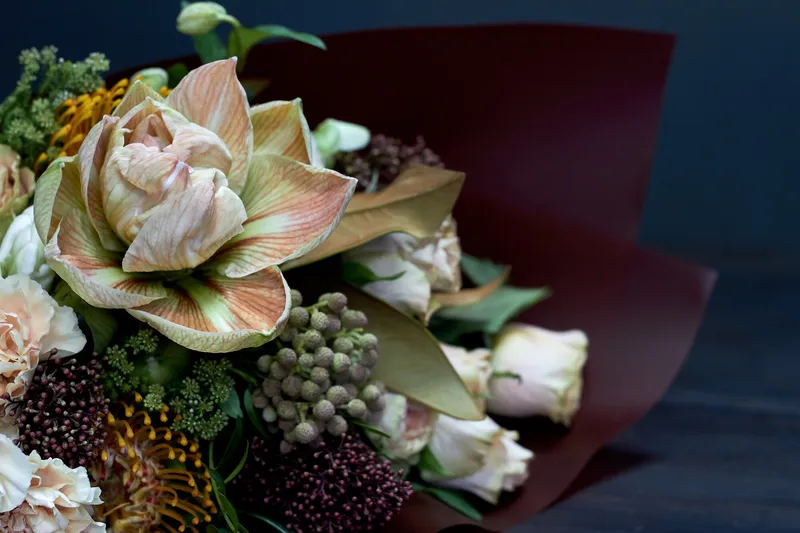
Biedermeier flower painting was not limited to small, modest bunches. The Belvedere’s historical exhibition Say it with Flowers!, held from 22 June to 30 September 2018, described the period as a high point for elaborate arrangements. Its examples included Ferdinand Georg Waldmüller’s Still Life with Fruit, Flowers and a Silver Cup from 1839. The exhibition has ended; its documentation remains useful for choosing artists to research.
The silver cup in a title like Waldmüller’s gives you a useful viewing task. Compare the hard edge of metal with the soft outline of a petal, then notice how highlights connect them. The comparison of floral art in Vienna and other European cities expands that exercise to Dutch bouquets and modern French gardens.
From the painted bouquet to living material
Modern floral art can change the viewer’s relationship to the image. Instead of inspecting individual species, you may read a field of colour or a nearly continuous pattern. In a living installation, the material also changes during the exhibition: buds open, petals fall and a replacement stem may alter the arrangement. That makes maintenance part of the work’s interpretation, not merely background housekeeping.
The same 2018 Belvedere exhibition included Willem de Rooij’s Bouquet V alongside historical paintings. That documented pairing offers a concrete route from painted flowers to living material. It does not mean the work is currently on display. Before planning a visit around a particular installation, consult the venue’s current programme rather than an archive photograph.
Materials: what art can learn from floristry
For a drawing class or a small installation, write down what should happen to the flowers over the display period. Do you need buds to stay closed, blooms to open together or petals to fall gradually? Choose stems and a maintenance routine for that brief. Fresh water, suitable containers and a stable position are practical requirements; they also determine the shapes the audience will see.
If you need to send flowers to Vienna online for a studio session, specify the flower type or visual effect, arrival date and who will accept the delivery. Confirm availability directly. An exhibition deadline needs a clear agreement, especially when you want multiple stems at a similar stage of opening.
A useful test is to photograph one trial arrangement at installation, the next morning and the following evening. Those three images will reveal changes in height, colour and orientation that a shopping photograph cannot predict. For a public display, agree where water can be changed and how to protect nearby artworks or flooring before the flowers arrive.
Museum view: where to follow the trail in Vienna
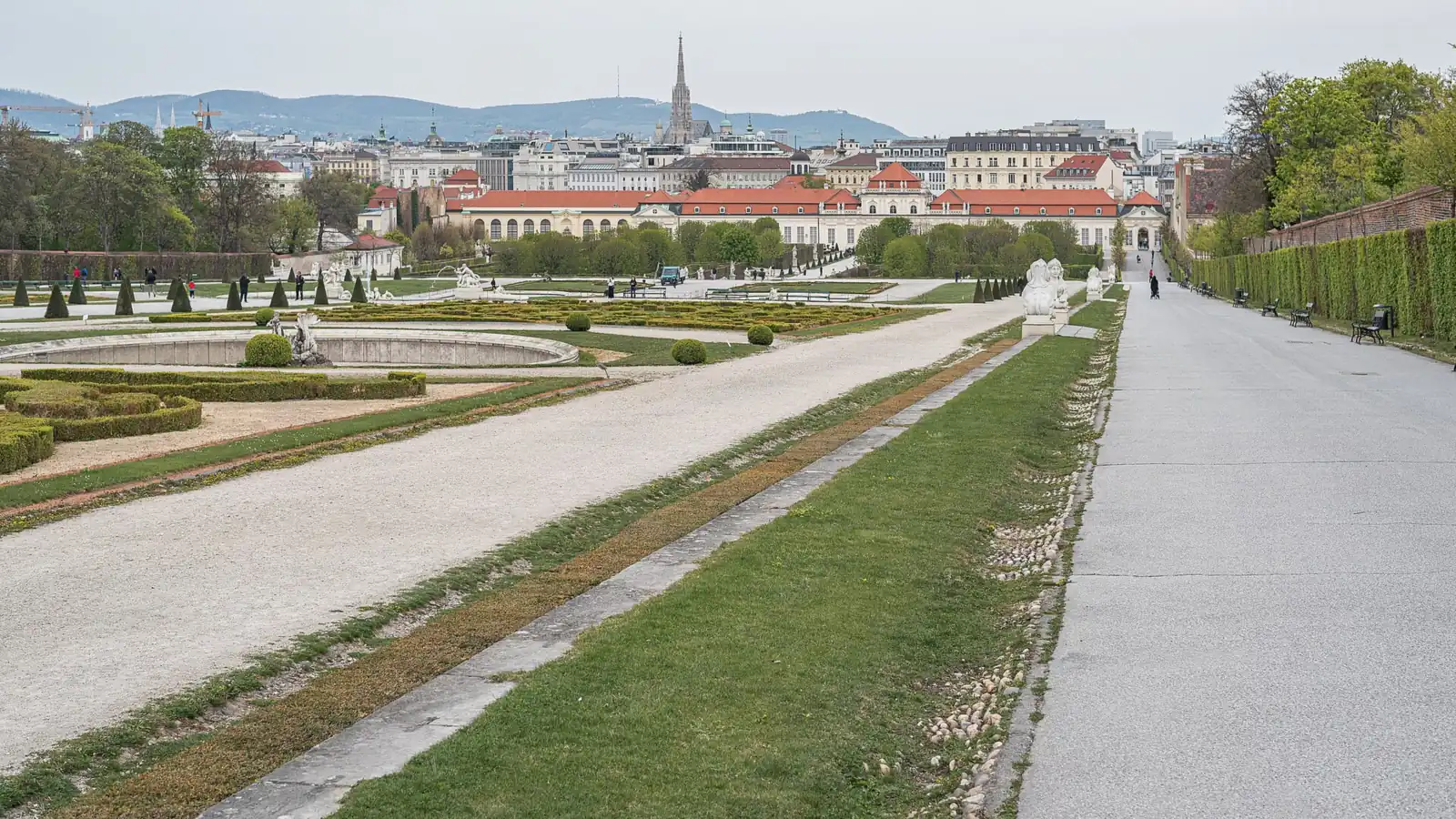
Begin with the Belvedere, but plan around specific works and their current locations. The palace gardens offer an immediate comparison between planted space and pictures of plants. Upper and Lower Belvedere are different venues, so an exhibition title should guide the ticket choice. The Vienna museum comparison helps when you want to combine painting with design or contemporary art.
My viewing tip: give one flower picture five uninterrupted minutes before reading every label in the room. First note the brightest bloom, then the darkest gap, then one detail that looks imperfect. Afterwards, use the title, date and museum commentary to test your first impression. You have something concrete to remember, rather than a phone full of nearly identical gallery photographs.
The modern installation: bloom, space and transience
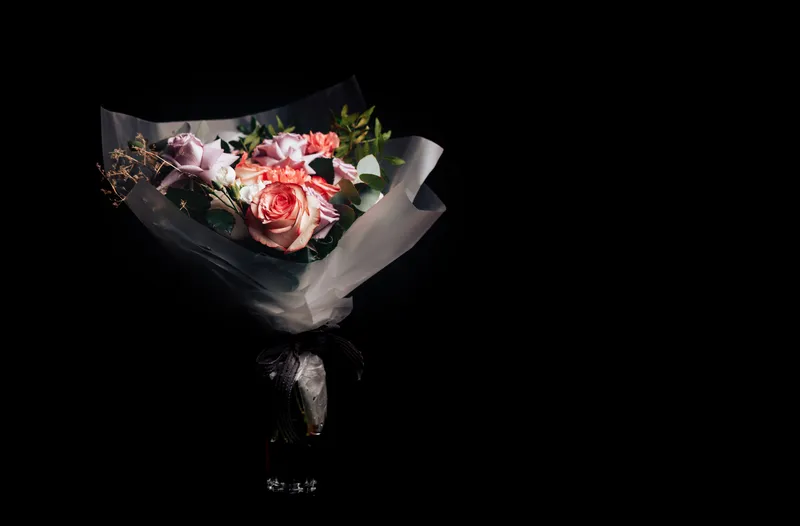
For a living floral work, the room changes the reading. A single vase on a plinth directs attention to its silhouette; several vessels spaced across a floor make the gaps and walking route visible. Strong scent can affect the experience too. When interpreting a display, separate what you can observe from what the artist or curator says the work intends.
A floral route need not be confined to ticketed galleries. A façade, a garden bed and a painted bouquet let you compare the same plant-like curves at different scales. Use the guide to free art in Vienna for another stop, then ask which example imitates a plant closely and which turns it into a pattern.
Make room for less familiar names
If you arrived with Klimt in mind, leave space in your notebook for Olga Wisinger-Florian and Marie Egner. The Belvedere’s 2018 account identifies both among the artists who renewed flower painting towards the end of the nineteenth century. Search for their work alongside the more familiar names rather than treating them as a footnote. Choose a flower picture that makes you want to pause, then compare its handling of light with the first work you studied. That personal connection is a good reason to look more carefully.
Four details worth recording in your notebook
| Detail | Question to ask |
|---|---|
| Stage of the bloom | Is it a bud, fully open or fading, and does that change the mood? |
| Container and setting | Does the vessel compete with the flowers or recede behind them? |
| Scale and repetition | Are you looking at individual plants or an almost abstract pattern? |
| Material and time | Is change represented in paint, or happening to real stems? |
For a companion walk, the Vienna Art Nouveau route gives floral lines an architectural setting. Compare a decorative curve with a stem you have just drawn. Similarity can be a useful observation without proving that an architect copied that particular species.
Good to know
What did flowers mean in the classical still life?
In still life painting, flowers often stood for beauty, wealth and painterly skill, but also for transience. A wilting bloom or a fallen leaf could remind viewers that life, possessions and youth are limited in time.
Why are floral motifs so important to Viennese modernism?
Around 1900, the flower became a basic design form in Vienna. Art Nouveau, the Secession and the Wiener Werkstätte translated plants into lines, ornaments, patterns and planes. In that way, the flower moved from the picture into space and everyday life.
Can real flowers be considered an artistic material?
Yes. In contemporary installations, real flowers become a living material. Their scent, their changes and their wilting are part of the work’s meaning and make time visible.
What should you keep in mind when using flowers in an exhibition?
What matters is longevity, water and light conditions, room temperature, scent intensity, allergy risks and the intended change over the course of the exhibition. A good floral work takes transience into account.
More notes
Journal – 5 min read
Flowers as a motif in Europe’s art capitals: from Vienna to Paris, Amsterdam, Florence and Warsaw
Flowers appear across Vienna’s museums in paintings, textiles and façades. Paris, Amsterdam, Florence and Warsaw each read the motif differently…
Journal – 5 min read
The main Vienna museums compared: which suits which interest?
Kunsthistorisches Museum, Belvedere, Albertina, Leopold, mumok and MAK each have a different focus. Which one suits which interest, and…
Journal – 5 min read
Discover Art Nouveau in Vienna: a walk from Otto Wagner to the Secession
From the Postsparkasse and the Wienzeilenhäuser to the Secession: a walk through Vienna’s key Art Nouveau buildings, with notes on what you…