Discover Art Nouveau in Vienna: A walk from Otto Wagner to the Secession
Journal – 7 min read
Start your Vienna Art Nouveau walk at Otto Wagner’s Karlsplatz pavilions, continue to the Secession, then follow Linke Wienzeile to the Majolikahaus and its gilded neighbour. Allow roughly 90–120 minutes for this outdoor route with stops, and treat the Postsparkasse as an optional extension across the city centre.
Text: Elisabeth Hofer · · Updated
Vienna around 1900: why Art Nouveau flourished here
Vienna’s Art Nouveau becomes easier to understand when you see it doing ordinary jobs: marking a station entrance, decorating a rented home or welcoming customers into a banking hall. Otto Wagner is a useful thread through that story. His buildings let you compare decorative richness with a growing clarity of shape and purpose.
You need no specialist vocabulary to begin. Look at what the building is for, then ask how its materials and ornament respond. The Vienna Tourist Board’s architectural overview identifies the principal sights. The following order makes a manageable first walk; the suggested time includes looking and photographs, not just walking.
| Stop | Where to go | What to plan |
|---|---|---|
| Otto Wagner pavilions | Karlsplatz | Outdoor viewing; museum interior is seasonal |
| Secession | Friedrichstraße 12 | Exterior first; allow extra time for Klimt inside |
| Wienzeile buildings | Linke Wienzeile 38 and 40 | View the façades from public space |
| Optional Postsparkasse extension | Georg-Coch-Platz 2 | A separate walk across the centre; check interior hours |
Start at the Karlsplatz pavilions
Begin beside the two former Stadtbahn pavilions. The Wien Museum describes their iron construction with inserted marble panels. Notice how a transport building receives the care you might expect from a ceremonial entrance: pale surfaces, metalwork and ornament sit within a clear structural frame.
The western pavilion houses the museum’s display about Wagner. Its published winter closure runs from 1 October to 1 May, so a November walk should plan on the exterior. Seasonal opening is Friday to Sunday, with a midday break; check the current listing before building an indoor visit into your day.
From Karlsplatz, head towards Friedrichstraße and the Secession. Use the marked crossings rather than following the dome while looking through a camera. The transition is part of the pleasure: a busy transport setting gives way to an unmistakable statement about art.
To the Secession: a manifesto in white and gold
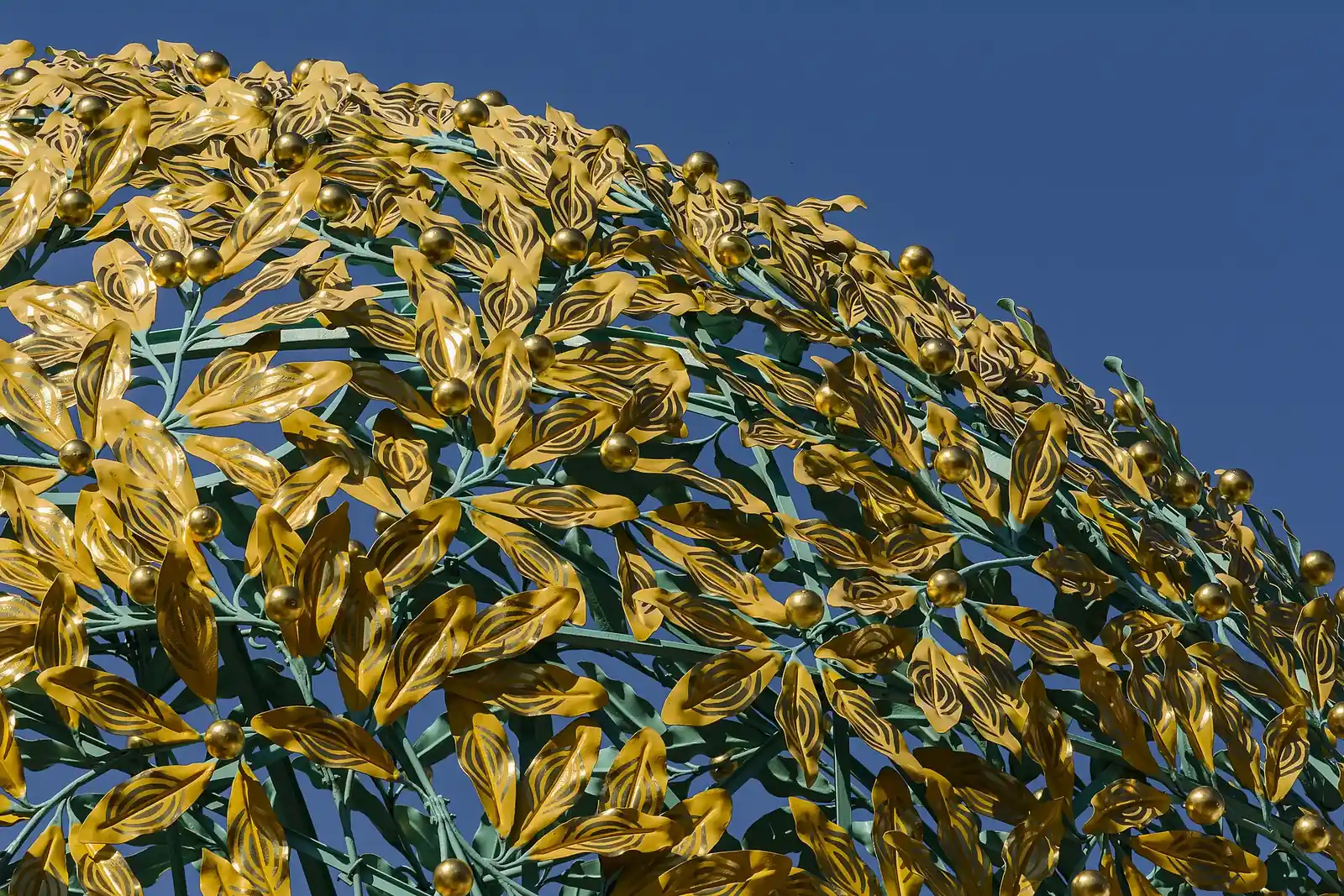
Joseph Maria Olbrich designed the Secession as the artists’ association’s exhibition building. Its official building history records completion on 29 October 1898. Stand far enough back to see the plain white volumes beneath the golden laurel dome, then move closer to the entrance and its decorative details.
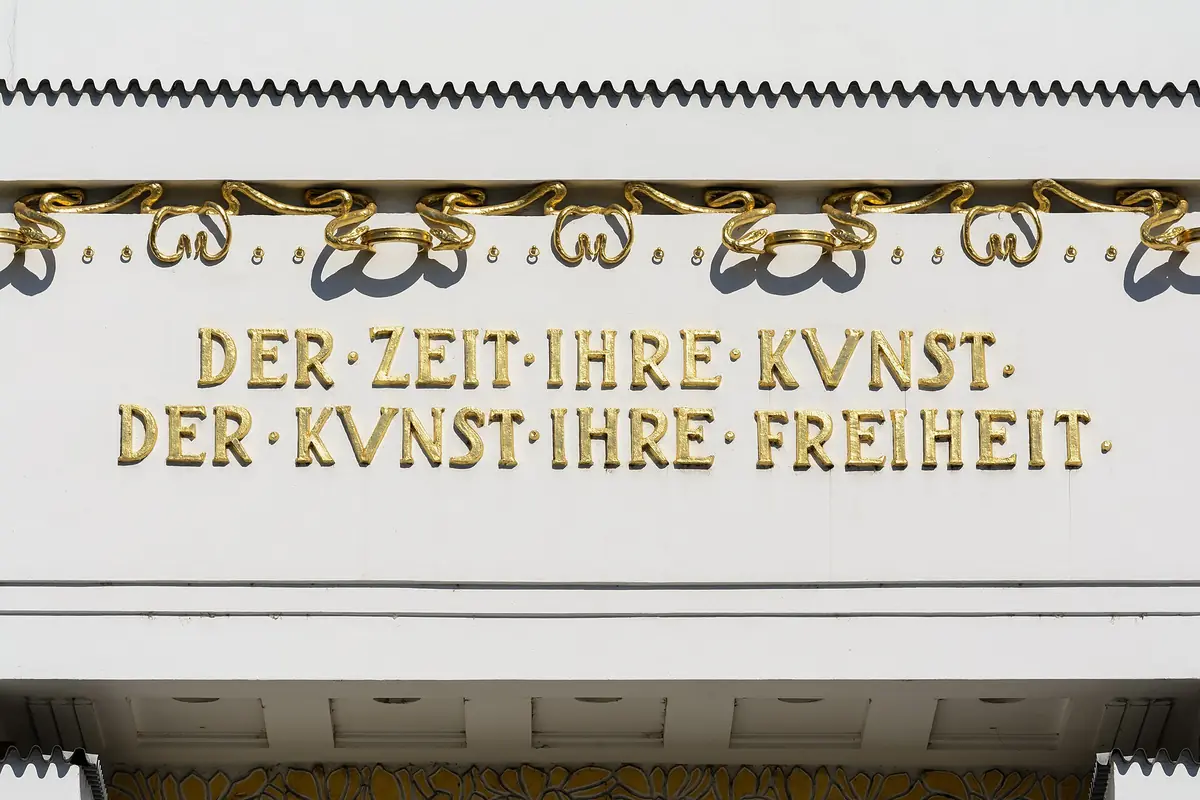
Above the doorway, “To every age its art, to art its freedom” still explains the building’s ambition. The Vienna History Wiki entry on the Secession provides further historical context. Notice the owls on the side elevations too; the dome is memorable, but it is only part of the design.
Inside, Klimt’s Beethoven Frieze, created for the 1902 exhibition, is a permanent display alongside a changing contemporary programme. Check which exhibition rooms are open on your date. If you want to compare this experience with a longer collection visit, our Vienna museum comparison will help you choose.
Majolikahaus and Medaillonhaus: ornament as a city experience
Continue along Linke Wienzeile beside the Naschmarkt towards Kettenbrückengasse. At number 40, the Majolikahaus turns the whole façade into a floral composition in glazed ceramic. The neighbouring building at number 38 provides a different treatment, with gilded ornament. Together, they make an unusually clear comparison without another museum ticket.
First take in each façade as a whole. Then compare one window bay, balcony and stretch of decoration. On the Majolikahaus, follow how the flowers relate to the regular grid of windows. Our guide to flowers in Viennese art history carries that interest into paintings and other works.
These are occupied buildings. Plan an exterior visit and leave entrances clear. A closer photograph of a tile or railing can be more revealing than trying to squeeze the entire façade into every frame. If your feet need a pause, this is a sensible point to finish the compact route before deciding whether to continue.
How to recognise Vienna Art Nouveau
Look for relationships rather than a single decorative signature. Stylised plants can sit beside strict geometry; a lavish surface can cover a very straightforward building. Compare the lettering with the doorway, and the metalwork with the windows. The interest lies in how the parts work together.
My looking tip: choose one small detail at each stop and sketch it in thirty seconds. A leaf, a repeated square or a curve is enough. You will start noticing differences that disappear when every stop becomes another quick photograph.
For a deeper historical reading, the Institute of Art History at the University of Vienna offers academic context. For a comfortable break between stops, our guide to Viennese coffee house culture explains the everyday rituals around the table as well as the interiors.
Extend the walk to the Postsparkasse
The Postsparkasse at Georg-Coch-Platz 2 lies on the other side of the centre from the Wienzeile buildings. Add it when you have half a day for the full outing, especially if you also enter the Secession. It is a rewarding comparison, not the next doorway along the compact route.
Its great former banking hall now forms part of a place for art and research. The owner, BIG, confirms free weekday access to the large hall unless a private event closes it. The Angewandte Interdisciplinary Lab lists free entry and exhibition hours of Monday to Friday, 11:00–18:00, excluding public holidays. Check the current programme before making the detour for an interior visit.
Compare the sense of light and order here with the floral surface of the Majolikahaus. You are seeing different answers to the same practical question: how can a modern building feel thoughtful and welcoming? For further stops without an admission charge, see our free-art guide to Vienna.
If Kirche am Steinhof is also on your wish list, give it a separate outing; it is outside this central walking route. In wet or cold weather, shorten the outdoor portion and check your indoor destination first. A closed door should not become the main memory of a beautiful afternoon.
Good to know
How long does the Art Nouveau walk in Vienna take?
For the main route from Karlsplatz via the Secession to the Wagner buildings on Linke Wienzeile, you should allow about one and a half to two hours. If you visit the Secession and extend the walk to the Postsparkasse, it can easily take half a day.
Can you do the route without a guide?
Yes, the main stops are easy to find and centrally located. A guided tour can add extra art-historical detail, but the walk is well worth doing on your own too, if you take time to look at the façades, inscriptions and materials.
What is the difference between Vienna Art Nouveau and Secession?
Art Nouveau refers broadly to the art and design movement around 1900. The Vienna Secession was a specific artists’ group that played a major part in shaping that break with the past in Vienna. Its exhibition building, the Secession, became the architectural symbol of that attitude.
Which Otto Wagner buildings should you definitely see in Vienna?
For a first impression, the Stadtbahn pavilions at Karlsplatz, the buildings on Linke Wienzeile and the Postsparkasse are the best choices. If you have more time, you should also visit the Kirche am Steinhof, one of the most important sacred buildings of Vienna’s modernist period.
Is the walk worthwhile in bad weather too?
Yes, although ceramics, metal and gilding look very different depending on the light. In the rain, the glazed surfaces of the Majolikahaus can appear especially vivid. Dry weather is more pleasant for longer viewing, but Art Nouveau does not lose its elegance on grey days.
More notes
Journal – 5 min read
Experience free art in Vienna: galleries, open-air works and museum days
A lot of art in Vienna costs nothing: galleries, public art, free museum days. Where to find them and when it is worth going.
Journal – 5 min read
Culture in winter: the best concerts, exhibitions and theatre evenings in Vienna
Winter is peak season for Vienna’s cultural calendar. Concerts, exhibitions and theatre, plus tips for tickets, standing places and last-minute returns.
Guide – 5 min read
How do I plan the perfect cultural weekend in Vienna? Route, tickets and insider tips
Two days are not enough for everything. Better to choose one big museum, one smaller venue and an evening with music or theatre. A route with ticket tips…