Vienna coffeehouse culture explained: history, etiquette and the best addresses
Journal – 7 min read
Vienna coffeehouse culture is the tradition of taking time over coffee, newspapers and conversation in a shared public room. Order from the menu, settle in with consideration for other guests, and choose a café that suits your route and mood rather than its fame alone.
Text: Maximilian Huber · · Updated
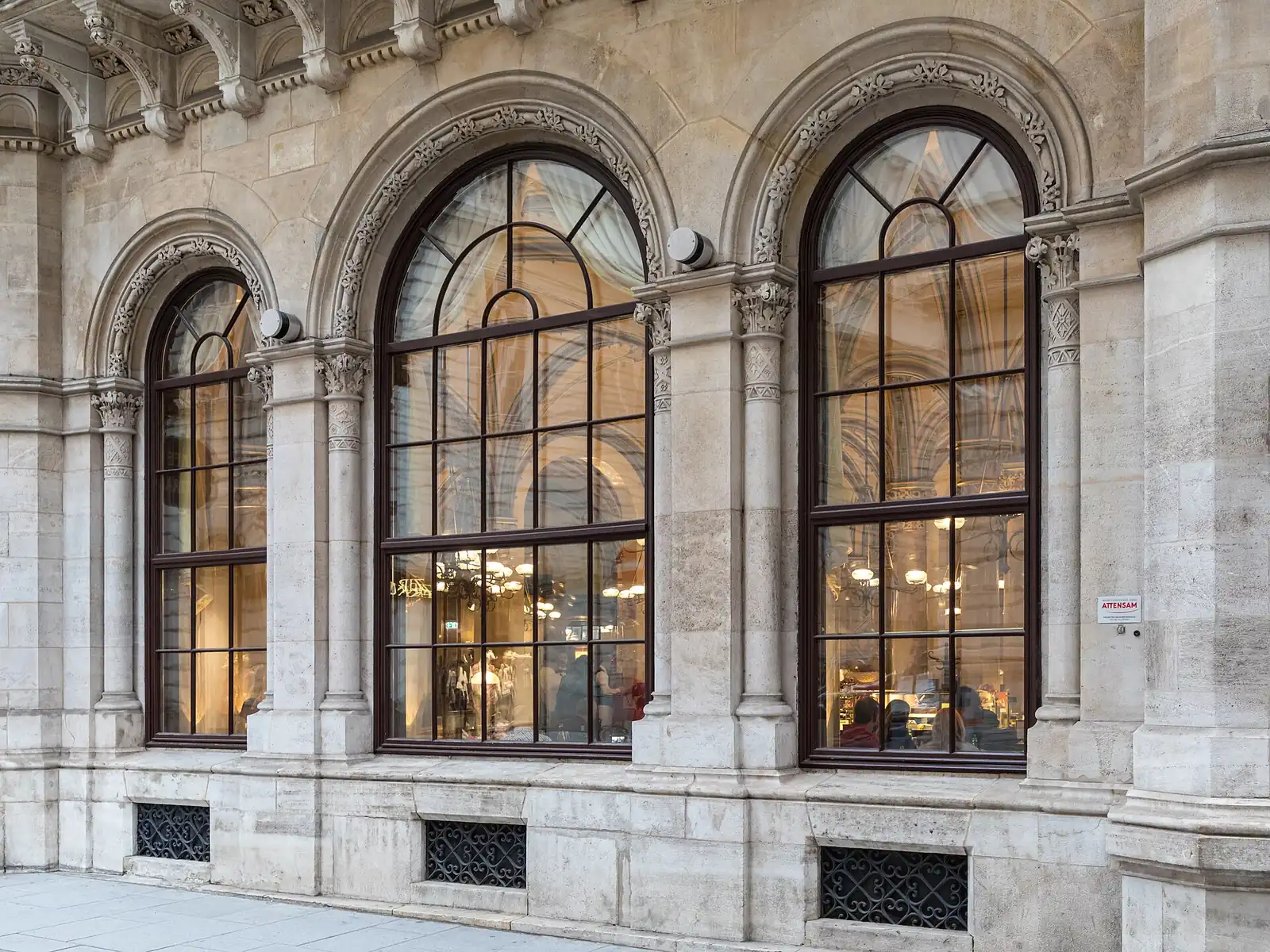
What makes a Viennese coffeehouse different?
A marble table, a newspaper folded onto its holder, the small clink of a cup: the appeal is often ordinary and reassuring. You can meet a friend, read alone or sit with the impressions of a museum visit. There is no requirement to perform a grand cultural experience.
The Austrian UNESCO Commission added Viennese coffeehouse culture to Austria’s national inventory of intangible cultural heritage in 2011. This recognises a social tradition; it is not a UNESCO World Heritage designation for every café building.
What should you order?
You can simply say what you like. If you want to recognise the local names, these three cover a useful range. The Austrian National Tourist Office’s guide to coffeehouse culture explains the basic styles; exact preparation and cup sizes can vary by house.
| On the menu | What to expect | Choose it if… |
|---|---|---|
| Melange | Coffee with hot milk, usually topped with milk foam | You enjoy a milky coffee. |
| Kleiner Schwarzer | A small, strong black coffee, commonly an espresso | You want a short coffee without milk. |
| Verlängerter | A black coffee lengthened with hot water | You prefer a longer cup; specify milk if you want it. |
“Eine Melange, bitte” means “a Melange, please”. “Die Rechnung, bitte” asks for the bill. English and a friendly explanation are perfectly reasonable too. If you need decaffeinated coffee, a milk alternative or allergy information, ask before ordering instead of assuming a familiar-looking drink has the same ingredients everywhere.
Etiquette without the anxiety
At a traditional table-service café, greet the staff and check whether you should wait to be seated. Read the menu before ordering: a beautiful room does not make the prices uniform across Vienna. If a queue is long, decide how much of your afternoon you want to spend in it.
Lingering belongs to the tradition, but it is not a promise of unlimited table time. Be considerate when the house is full, ask before spreading out a laptop, and keep calls quiet. Request the bill when you are ready. If paying by card, check how you can include any tip you wish to give.
How did Vienna’s coffeehouses begin?
The famous story credits Georg Franz Kolschitzky with coffee beans left after the siege of 1683. The documented history is different: Wien Museum’s collection record identifies Johannes Deodat, also known as Diodato, as the recipient of a coffee-serving privilege on 17 January 1685. The legend is memorable; the distinction matters.
Newspapers became part of the experience early. The UNESCO account identifies the Kramersches Kaffeehaus on the Graben as offering them in 1720. Coffeehouses subsequently became places for reading, exchanging ideas and meeting beyond the home. That helps explain why a newspaper table can feel as characteristic as the coffee itself.
For a fuller historical account, use the city’s Vienna History Wiki. The overview of the Vienna coffeehouse provides further names and terminology. Neither should be used as an up-to-date opening-hours directory.
Classic coffeehouses and where to find them
Café Central: check the renovation update first
As checked on 22 November 2026, Café Central’s official website still announces closure from 16 March 2026 for renovation, with reopening planned for winter 2026. It directs guests to DECENTRAL on the Freyung in the meantime. Confirm the actual reopening before planning a visit to the historic Palais Ferstel interior; a seasonal target is not a confirmed opening date.
That matters if the vaulted room is the reason you want to go. An alternative branch can offer coffee and pastries without offering the same setting. You can still enjoy a lovely coffeehouse afternoon at another address below.
Café Sperl: Gumpendorfer Straße 11, 1060 Vienna
Café Sperl, established in 1880, retains the marble tables, Thonet chairs and billiard tables associated with the traditional coffeehouse. It is a useful choice when your day centres on Mariahilf, the Naschmarkt or MuseumsQuartier. Check the current opening hours before making it your final stop.
Café Museum: Operngasse 7, 1010 Vienna
Café Museum dates from 1899 and is conveniently placed for Karlsplatz, the Secession and the State Opera. Choose it when you want the coffee break to fit naturally between nearby visits. Its artistic associations are part of the attraction, but you do not need to know the guest list to feel welcome.
Café Prückel: Stubenring 24, 1010 Vienna
Café Prückel offers a Ringstrasse setting with newspapers and Viennese dishes as well as coffee and pastries. It works well for an eastern Inner City itinerary. If you are meeting friends, give the full address rather than simply suggesting “a café on the Ring”.
Café Hawelka: Dorotheergasse 6, 1010 Vienna
Café Hawelka is a central option close to the Graben. Its published café and coffee-shop information covers different premises, so check the café listing when planning a visit. A stop here fits easily into a walk through the Inner City without another transport journey.
How to find a coffeehouse that feels right for you
Choose the kind of pause you need. For a conversation, look for a table where you can hear each other. For reading, good light may matter more than a celebrated ceiling. With children or a pushchair, ask about space before settling in. Your best café is allowed to be a practical one.
My tip: take a small book and leave one hour free, but keep a second café nearby in mind. If the first has a queue or feels too busy, move on without feeling you have missed “the real Vienna”. A relaxed hour elsewhere is still part of the city.
Make coffee part of your cultural day
Pair Café Museum with the Karlsplatz area, Sperl with the western centre, or Hawelka with an Inner City walk. Our Vienna cultural weekend itinerary helps connect those stops. Choose a café near the activity you have booked, especially before an evening performance.
For a modest budget, combine one coffeehouse visit with free art in Vienna. If a museum is your main event, the guide to Vienna’s principal museums can help you choose. The café gives the day a pause: time to compare a favourite painting, write a postcard or enjoy being somewhere together.
Frequently asked questions
Can you stay for a long time in a Vienna coffeehouse?
Yes, staying on is generally part of the culture. Even so, a bit of tact helps: in a very full house at busy times, occupying a table for hours with only a minimal order feels less graceful. In the afternoon, at quieter times, or in larger coffeehouses, lingering over a book or work is usually less of an issue.
Do you need to book ahead?
At famous places and at popular times, booking can make sense, especially for several people. For spontaneous visits, the early morning or later afternoon is a good bet. If you are flexible, you often find the loveliest atmosphere in the less crowded cafés.
Which coffeehouses are best for a first visit to Vienna?
Café Sperl, Café Prückel and Café Museum are useful first choices, depending on your route and preferred setting. Café Central requires an extra check: its official site announces a 2026 renovation with reopening planned for winter, so confirm that the historic premises have reopened before travelling there.
Is the Vienna coffeehouse more of a sight or an everyday place?
Ideally, both. Some classics are now heavily shaped by tourism, but the basic idea is still alive: a public indoor space for coffee, reading, conversation and watching the world go by. Those who linger instead of just consuming experience the coffeehouse as part of everyday Vienna, not as a museum.
More notes
Journal – 5 min read
Flowers in Vienna’s art history: from still life to modern installation
From Baroque still life to Klimt’s gardens and installations with real flowers: where to find flowers in art in Vienna’s museums and exhibitions…
Journal – 5 min read
Flowers as a motif in Europe’s art capitals: from Vienna to Paris, Amsterdam, Florence and Warsaw
Flowers appear in Vienna’s museums in paintings, textiles and façades. Paris, Amsterdam, Florence and Warsaw each have their own…
Journal – 5 min read
The main Vienna museums compared: which one suits which interest?
Kunsthistorisches Museum, Belvedere, Albertina, Leopold, mumok, MAK: each has a different focus. Which suits which interest and…